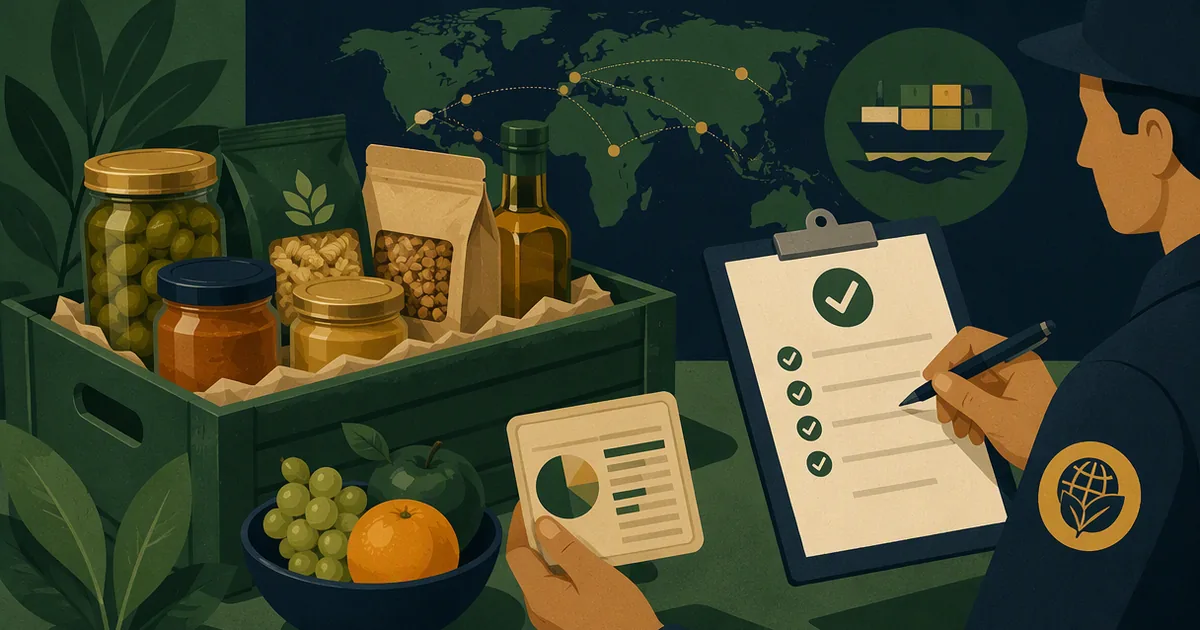
Importing Food & Beverages
Food sits at the intersection of two regimes: biosecurity (DAFF) and food standards (FSANZ). A food product must clear both — being safe for sale is not the same as being allowed across the border, and vice versa.
Step 1: Biosecurity — BICON first
Search BICON for your exact product and country of origin before anything else. Outcomes range from freely permitted to conditionally permitted (with treatments and certificates) to prohibited:
| Category | Typical position |
|---|---|
| Fresh fruit & vegetables | Almost always prohibited |
| Meat, dairy, eggs | Mostly prohibited or heavily restricted; approved-country commercial product only |
| Honey & bee products | Restricted — disease risk |
| Seeds, grains, nuts (raw) | Generally prohibited; Khapra beetle risk (includes raw rice, unpopped popcorn) |
| Shelf-stable processed foods | Often permitted; may need a BICON check + documents |
| Alcohol | Biosecurity-manageable; excise-equivalent duty + WET on wine (29%) apply |
Conditionally permitted goods commonly need an import permit (apply before shipping), a phytosanitary or health certificate from the exporting country, and a packing declaration.
Step 2: FSANZ labelling
Food sold in Australia must comply with the Australia New Zealand Food Standards Code:
- Ingredient list in descending order, with allergens declared (bolded emphasis is standard practice)
- Nutrition Information Panel in the prescribed format
- Date marking — best-before or use-by
- Country of origin food labels — "Made in", "Packed in" and percentage-of-Australian-ingredients bar requirements, policed by the ACCC
- Mandatory warnings for certain ingredients (e.g., kava, royal jelly, added caffeine)
- Name and address of the Australian importer/distributor
Brief your overseas manufacturer with the label artwork before production — re-labelling after arrival is possible but adds cost and delay.
Step 3: Border inspection — IFIS
Imported food is screened under the Imported Food Inspection Scheme (IFIS), a risk-based DAFF program:
- Risk-category foods (e.g., certain seafood, ready-to-eat meats, some dairy) are referred for inspection and lab testing at a rate set by compliance history — new importers typically start at a high referral rate.
- Surveillance foods are inspected at a lower baseline rate.
- Failures trigger holding, relabelling where lawful, re-export or destruction — at the importer's cost.
Practical sequence for a first food shipment
- BICON check → permits/certificates arranged before shipping.
- Label compliance review against the Food Standards Code.
- Confirm duty rate and any FTA preference; GST 10% on VoTI applies (some basic foods are GST-free domestically, but imported food GST follows the VoTI rules at the border).
- Full Import Declaration (> AUD 1,000) with permit references.
- Budget for IFIS inspection fees on the first consignments.
Personal imports of food by travellers and in mail are far more restricted — declare everything on arrival; most fresh and animal products will be seized and destroyed. See Special Cases.