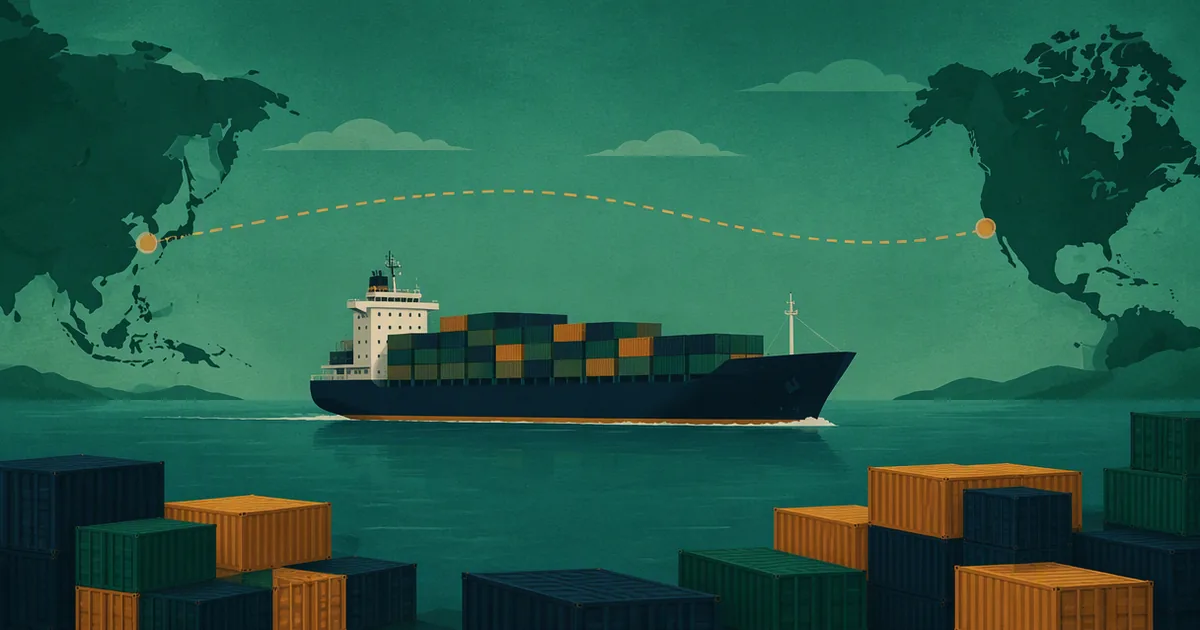
Importing from China to Australia
China is Australia's largest source of imported goods. The mechanics are the same as any other origin — but the scale of the China trade means well-trodden pathways, a mature free trade agreement, and a few traps that catch new importers.
ChAFTA — most Chinese goods are already duty-free
The China–Australia Free Trade Agreement (ChAFTA), in force since December 2015, eliminated tariffs on the vast majority of goods traded between the two countries. In practice:
- Most manufactured goods from China enter Australia at 0% duty — if you claim the FTA rate.
- Claiming requires a valid Certificate of Origin (or Declaration of Origin) issued in China and presented at entry.
- Without the origin document you pay the general 5% rate — money left on the table. See the FTA & Certificates of Origin guide.
GST still applies regardless of duty: 10% of VoTI (customs value + duty + international freight & insurance).
Freight options from China
| Mode | Transit | Best for |
|---|---|---|
| Sea FCL (full container) | ~2–4 weeks to Sydney/Melbourne/Brisbane/Fremantle | Volume orders; cheapest per unit |
| Sea LCL (shared container) | ~2–5 weeks | Smaller orders from one or few suppliers |
| Air freight | ~1 week | Urgent, high-value, low-weight stock |
| Express courier (DHL/FedEx/UPS) | Days | Samples and small restocks; courier clears ≤ AUD 1,000 parcels |
Supplier verification
- Verify the business licence and export credentials of any new supplier; video-call the factory or use a third-party inspection service before a first large order.
- Pay by methods with recourse (e.g., platform trade assurance or letter of credit for large orders); avoid full upfront bank transfers to new suppliers.
- Order samples first and test them against Australian standards before committing.
Compliance traps specific to China sourcing
- RCM/EESS for electronics — get test reports and certification done at origin; border remediation is far more expensive. See the electronics guide.
- Asbestos zero tolerance — vehicle parts, gaskets and building products need credible testing; overseas "asbestos-free" certificates are not accepted at face value.
- Labelling — country of origin, English-language information and an Australian importer address are required before sale. Brief your supplier before production, not after arrival.
- BMSB season — machinery, vehicles and parts shipped September–April may need pre-shipment treatment under seasonal measures.
- Under-declaration — suppliers offering to "write a lower value" create liability for you: the ABF reassesses, penalises, and can seize goods.
The process in brief
Confirm the goods are allowed (ABF list + BICON) → verify supplier → agree Incoterm (FOB is common) → get HS classification and confirm ChAFTA eligibility → Certificate of Origin arranged → ship → SAC or Import Declaration → pay GST → clear biosecurity → comply before sale. Full walkthrough in Getting Started.