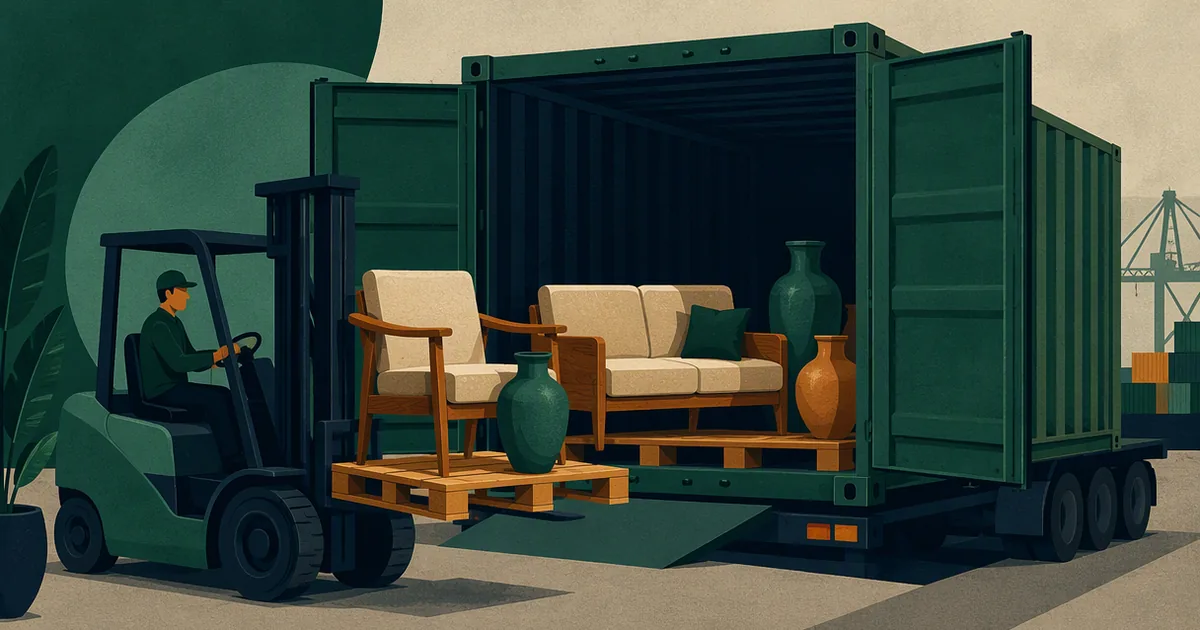
Importing Furniture & Homewares
Furniture is bulky, low-value-per-kilo and often made of timber — which makes it a biosecurity-sensitive category. The money and the quarantine rules both need attention before you ship.
Biosecurity: timber, bark and packaging
- Timber, bamboo and wooden components must be bark-free and treated where BICON requires it — search BICON for your exact product type and origin.
- Wooden packaging and pallets must comply with ISPM 15 (heat treatment or fumigation with the IPPC mark). Unmarked pallets are a classic reason for consignments to be held, treated at cost, or re-exported.
- Any soil, plant material or insect contamination triggers treatment or destruction at the importer's expense — DAFF operates on full cost recovery.
- During BMSB season (roughly September–April), furniture shipped as break-bulk from target risk countries may face seasonal measures — confirm treatment requirements before booking.
Safety & compliance
| Product | Rule |
|---|---|
| Toppling furniture (chests of drawers, tall shelving) | Mandatory anchoring standard and warning labels |
| Bunk beds, cots, baby furniture | Category-specific mandatory standards (entrapment, stability, lead paint) |
| Ceramic foodware | Lead/cadmium leach limits — excessive levels need ABF permission |
| Glazed ceramics, toys with toxic coatings | Restricted — permission required |
| Electric furniture (massage chairs, lift desks, lamps) | RCM/EESS applies — see the electronics guide |
Duty, GST and landed cost
- Most furniture carries the general 5% duty rate, with 0% under ChAFTA/AANZFTA/CPTPP for qualifying goods from the main sourcing countries — claim it with origin documents.
- GST is 10% of VoTI — and because furniture freight is a large share of value, the freight component inflates your GST bill noticeably. Model it in the landed cost calculator.
- Freight dominates the landed cost: sea FCL is effectively the only economical mode for volume; consolidate suppliers into one container where possible.
Homewares extras
- Cosmetics, candles and cleaning products sold alongside homewares fall under AICIS industrial chemicals rules (registration, GHS labelling, SDS).
- Textile homewares (bedding, towels, curtains) need care labelling like clothing — see the clothing & textiles guide.
- Keep supplier declarations for materials and finishes on file — especially asbestos-free declarations for older-style composite products and brake-adjacent hardware.